- Footy Access Exclusive
- Posts
- Pathway Signals: International Doors Opening for U.S.-Developed Talent
Pathway Signals: International Doors Opening for U.S.-Developed Talent
From River Plate’s academy to dual-sport international representation and strategic national team switches, this week’s stories highlight how U.S.-developed players are leveraging global pathways to accelerate responsibility, visibility, and long-term development.


Leonardo Santos & Lucas Aguirre
January 26, 2026
Enry Hernandez Joins River Plate Academy For 2026 Season

@enrydh
2007-born attacking midfielder Enry Hernandez has officially joined River Plate’s academy ahead of the 2026 season, a major step in one of the world’s most competitive development pipelines. The move follows an extended trial period throughout 2025, during which Hernandez earned the club’s confidence and finalized his transition to Argentina.
Hernandez developed at Met Oval Academy, where he built his reputation as a technical, creative No. 10. Comfortable operating between the lines, he stands out for his close control, spatial awareness, and ability to connect phases of attack — traits that translate well beyond the domestic youth level.

@enrydh
Eligible through Salvadoran heritage, Hernandez has already collected U.S.-based recognition, earning United Soccer Coaches All-American honors in 2024, a marker of both consistency and impact in a crowded youth landscape.
River Plate’s interest is telling. The club has a long track record of producing elite attacking midfielders, and Hernandez’s profile aligns with River’s emphasis on technique, tempo control, and tactical intelligence.

@enrydh
Hernandez’s move reinforces a growing reality in the modern pathway — top South American academies are actively scouting U.S.-developed players who show high football IQ and technical upside. For players and families, it’s another data point that elite development opportunities aren’t limited by geography, but by profile and readiness.
Video & Data Analysis Is a Game-Changer for Youth Development
In today’s competitive youth soccer environment, development isn’t just about talent—it’s about understanding the game on a deeper level. That’s where SGA Performance Analysis comes in.

By combining advanced video breakdowns with precise data insights, SGA is transforming how players learn, adapt, and grow.
Here’s how it changes the game:
Sharper Decision-Making
When players watch themselves in real match situations, they begin to recognize what worked—and what didn’t. This visual clarity helps improve reactions, passing choices, and movement in key moments.Elevated Tactical Awareness
Through frame-by-frame analysis, players gain a clearer understanding of positioning, shape, and space—allowing them to read the game, not just play it.Sustainable Long-Term Development
With access to personalized performance data—like pass accuracy, defensive involvement, and movement patterns—players and coaches can track growth over time and set targeted goals.
SGA’s technology isn’t just highlighting what happened—it’s explaining why it happened and how to improve it.
Whether you’re developing top talent or coaching the next wave of stars, this is the edge that turns potential into progress.
The Unique Dual-Sport Journey Of JD Gunn

@johndavidgunn
JD Gunn, goalkeeper for New England Revolution, has one of the most unique athletic profiles in the region, having represented Panama internationally in both football and basketball. Dual-sport national team experience at this level is rare — and almost unheard of within MLS development pathways.
On the football side, Gunn has earned youth international caps for Panama, standing out for his shot-stopping, athletic range, and command of the box. His performances with New England Revolution have positioned him as a goalkeeper with clear upside and long-term international relevance.

@johndavidgunn
What separates Gunn is his parallel résumé in basketball, where he has competed in FIBA-sanctioned events for Panama. Excelling internationally in two sports speaks to elite coordination, body control, and competitive instincts — traits that directly translate to the modern goalkeeper role.
Balancing two high-performance pathways at this stage is uncommon, especially as most prospects are pushed to specialize early. Gunn’s ability to do both reflects strong discipline, adaptability, and a high athletic ceiling.

@johndavidgunn
Gunn’s pathway challenges the idea that early specialization is the only route to elite football. For goalkeepers in particular, multi-sport backgrounds can be a developmental advantage — building movement skills, reaction speed, and mental resilience that don’t always come from football alone.
Adyn Torres Called Up To Puerto Rico U20 National Team

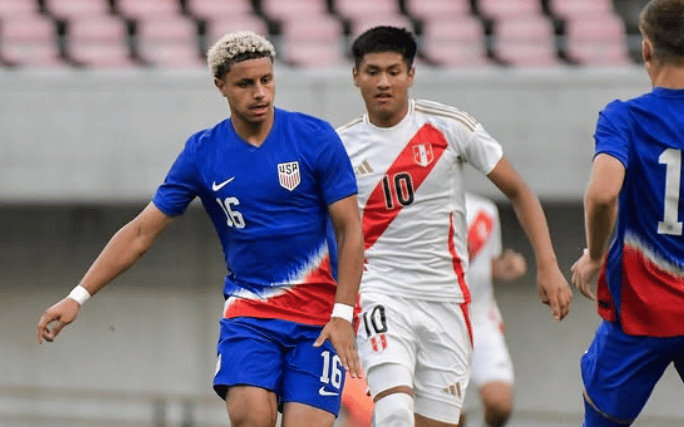
Atlanta United midfielder Adyn Torres has been called up to the Puerto Rico U20 national team for this year’s Concacaf U20 Championship qualifiers, marking his first involvement in an official international tournament cycle with the program.
Torres previously represented the United States at U16, U17, and U18 levels, a stretch that signaled long-term confidence in his development from U.S. Soccer staff. That experience gave him repeated exposure to high-performance national team environments and competitive international standards.

@adynxtorres
Now eligible for Puerto Rico, Torres steps into a setup where he has the opportunity to play a more central, influential role. His background in Atlanta United’s development system — paired with years inside U.S. youth national teams — adds tactical reliability and composure to Puerto Rico’s midfield group.
Technically clean, comfortable in possession, and strong at dictating tempo, Torres fits the demands of Concacaf tournament play, where game control and decision-making often determine outcomes.
@adynxtorres
Torres’ call-up highlights a growing trend of U.S.-developed players using dual eligibility to unlock meaningful international minutes. For many prospects, national team exposure isn’t just about prestige — it’s about responsibility, repetition, and accelerated development in real tournament settings.
From U.S. Friendlies to El Tri Starts: Gutierrez and Ledezma Switch

@miseleccionmx
Brian Gutiérrez and Richard Ledezma officially began new chapters at the international level, both starting for Mexico and making their debuts for the federation. The moment carried extra weight: each had previously appeared for the United States Men’s National Team in friendlies. They weren’t alone — Obed Vargas, who committed to Mexico several years ago, was also in the starting lineup. This wasn’t a symbolic call-up. It was trust.
Friendlies with the U.S. kept Gutiérrez and Ledezma eligible to make a one-time switch. Mexico didn’t just recruit them — they acted decisively. Instead of easing them in, El Tri put all three dual-national midfielders straight into the lineup, signaling clear intent and belief in their long-term value. For players who spent years in U.S. youth systems, this was a definitive pivot.

@miseleccionmx
This moment cuts to the core of modern international soccer: opportunity beats affiliation. Gutiérrez, Ledezma, and Vargas didn’t switch because of hype — they switched because Mexico offered clarity, minutes, and a defined role. Starts on debut matter. They communicate trust faster than any recruitment pitch ever could.
Mexico’s approach here is strategic, not reactionary. By recruiting U.S.-developed players and immediately integrating them, El Tri is leveraging the best of both worlds: American development infrastructure and Mexican national team identity.

@miseleccionmx
Gutiérrez, Ledezma, and Vargas didn’t just make debuts. They made a statement about how international careers are being built in this generation. And for the next wave of dual-nationals coming up, this moment will absolutely shape their decisions.