- Footy Access Exclusive
- Posts
- Pathway Check: Vertex Cup Sets The Tone & MLS Academies Double Down On Elite Prospects
Pathway Check: Vertex Cup Sets The Tone & MLS Academies Double Down On Elite Prospects
From high-pressure performances at the Vertex Cup to structured homegrown investments in Houston and strategic academy recruitment in Orlando, the U.S. youth development pipeline continues to prioritize clarity, competition, and long-term player progression.

Leo Santos
April 17, 2026
Vertex Cup Opens Up With Concacaf Wins In Dramatic Fashion

The Vertex Cup officially kicked off Thursday in Miami, and the U16 tournament wasted no time delivering high-stakes football. The opening slate featured two matches that immediately set the tone: tight margins, emotional swings, and players already being tested in pressure environments that mirror the next level. For a tournament designed to spotlight emerging international talent, Day 1 delivered exactly what the pathway demands — decision-making under stress.
The U.S. opened with a 1-1 draw in regulation against England, with Robert Turdean providing the Americans’ lone goal. But the real evaluation point came after the whistle. In the penalty shootout, the U.S. converted under pressure to secure a 5-4 win, earning two points from the fixture. At this level, composure is a differentiator — and the U.S. group showed an ability to execute in controlled chaos.

The second match shifted the narrative from control to resilience. Mexico’s 3-2 comeback win over Argentina was the most dynamic performance of the day. Down two goals, Mexico didn’t deviate from its structure. Luca Silva, Juan Martinez, and Felix Gomez led the response, overturning Bruno Cabral’s brace and flipping the match through collective execution rather than individual panic.
From a development lens, Mexico’s performance highlighted a key pathway trait: tactical discipline under adversity. Youth teams often fracture when chasing games. Mexico did the opposite — they stayed compact, trusted their spacing, and capitalized when moments opened. That’s a signal of coaching clarity and player buy-in, two indicators that typically translate well to higher levels.

After Day 1, the standings reflect both results and mentality. Mexico leads the group with three points, the U.S. sits second with two, England holds one, and Argentina remains without points. But more important than the table is how those points were earned — penalties, comebacks, and late-game execution are not random outcomes; they’re developmental markers.
The Vertex Cup isn’t just about results — it’s an early filter for which players can handle international pressure before the professional threshold. Sunday’s fixtures (U.S. vs. Mexico, England vs. Argentina) will sharpen that evaluation. For players in this age bracket, these matches are less about standings and more about proving readiness for the next step in the pathway — where margins tighten and mentality becomes non-negotiable.
Houston Dynamo Locks In Long-Term Pathway Bet On Dimareli

Houston Dynamo 2
Houston Dynamo has taken a decisive step in reinforcing their development model, signing academy product Mattheo Dimareli to an MLS NEXT Pro contract through June 2027. The structure is intentional: the 16-year-old is set to transition to the first team in July 2027 on a guaranteed deal for the 2027–28 season, with club options running through 2030–31. It’s a clearly defined runway — one that aligns performance, patience, and projection.
Dimareli’s rise through Houston’s system has been linear and earned. Entering at the U-14 level, he progressed through each phase of the academy with increasing responsibility. By the time he reached Houston Dynamo 2, he wasn’t just participating — he was influencing games in a way that translated to consistent minutes and trust within a professional environment.

MLS NEXT Pro
His production at the MLS NEXT Pro level backs that trajectory. Across 48 appearances, Dimareli recorded seven goals and six assists, operating as a reliable attacking outlet. More importantly, his profile extends beyond raw numbers — his spatial awareness between lines, efficiency in tight combinations, and willingness to take initiative in key moments point to a player already adapting to the tempo and demands of the pro game.
From a developmental standpoint, this signing reflects a broader shift in how MLS clubs are managing elite prospects. Rather than rushing talent or leaving progression undefined, Houston has built a controlled pathway with clear benchmarks. The MLS NEXT Pro phase becomes a proving ground, not a placeholder — bridging academy dominance to first-team readiness with intentional exposure.

MLS NEXT Pro
The milestone is also significant internally. Dimareli becomes the 21st homegrown signing in club history, reinforcing Houston’s commitment to internal development as a primary talent pipeline. In an increasingly competitive global market, producing first-team contributors from within is no longer optional — it’s a strategic advantage.
Dimareli’s deal is a case study in modern player development structure. The dual-national prospect — eligible for both the United States and Mexico and fresh off involvement in the 2026 Concacaf U-17 Championship — now has a defined pathway that removes uncertainty and maximizes growth. For players and families navigating the system, this is the model: clarity, competitive minutes, and a contract that aligns long-term opportunity with present-day accountability.
Orlando City Adds 2011-Born Forward Starrett In Strategic Academy Move
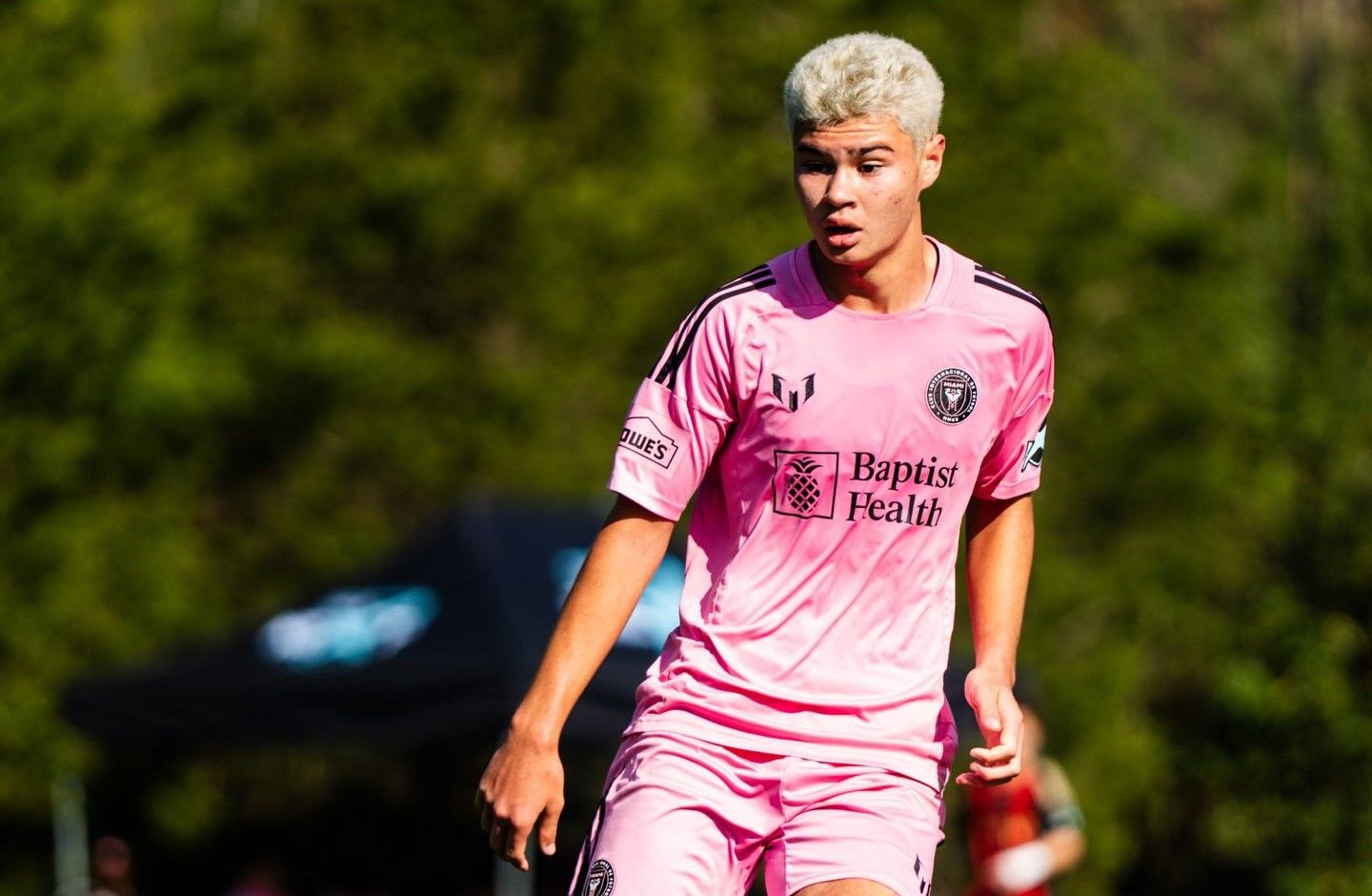
Orlando City has secured a high-upside addition to their youth pipeline, officially bringing in 2011-born center forward Carson Starrett from Inter Miami. The move reflects Orlando’s continued emphasis on identifying top attacking profiles early, particularly in a generation where projecting long-term ceiling is becoming increasingly data-informed and competitive across MLS academies.
Starrett’s foundation was built at the Barça Residency Academy in Arizona, a program widely recognized for prioritizing technical consistency and positional intelligence. That environment has shaped his profile into a modern striker — comfortable linking play, operating between lines, and not limited to traditional penalty-box actions. It’s a developmental base that aligns with how elite clubs now evaluate forwards at younger ages.

His transition to Orlando places him in one of the more stable academy-to-first-team ecosystems in the league. The club has consistently shown a willingness to promote from within, creating a pathway where performance at the youth level is directly tied to opportunity. For a player in Starrett’s phase, that alignment between development and visibility is critical.
On the field, Starrett’s standout trait is his spatial awareness in the final third. He consistently finds pockets inside the box and times his movements with a level of composure that separates him from typical early-stage forwards. That instinct — arriving in high-value areas without forcing actions — is a foundational trait that cannot easily be taught.

@carson_starrett
As he continues to develop physically and refine his technical execution, the focus will shift toward expanding his impact outside the box — link play under pressure, pressing triggers, and decision-making in transition moments. These are the indicators that will determine whether he evolves from a productive youth scorer into a complete attacking profile.
This move highlights a growing trend in U.S. development — early identification and strategic relocation of elite prospects into proven pathways. For Starrett, the decision isn’t just about environment; it’s about access to a system with a track record of advancement. In a landscape where margins are defined by development quality, Orlando’s investment signals belief in both his present profile and long-term projection.