- Footy Access Exclusive
- Posts
- Opportunity Knocks: MLS Teens Impress, USMNT Reveal WC Kits & Potential UCL Debut
Opportunity Knocks: MLS Teens Impress, USMNT Reveal WC Kits & Potential UCL Debut
From teenage starters at Inter Miami CF and a debut for Los Angeles FC prospect Jude Terry, to Matthew Gonzalez’s standout tournament run, Nike unveiling new United States men's national soccer team World Cup kits, and a potential UEFA Champions League debut for Bayern’s Leonard Prescott, the latest stories highlight a pivotal moment for young American talent on the global stage.

Leo Santos
March 16, 2026
Youth Momentum: Miami Starts Five, LAFC Debut

santi_.morales
Inter Miami delivered a clear signal about its developmental pipeline this week. Academy products Daniel Pinter and Santi Morales both started in the club’s match against Charlotte FC, marking a notable milestone for two teenage players trusted in a senior MLS lineup. Even more striking: they weren’t the only academy graduates on the field. Inter Miami started five academy-developed players overall — Pinter and Morales alongside Ian Fray, David Ruiz, and Noah Allen — underscoring the club’s growing commitment to internal player development.
For Pinter and Morales, the moment carries additional weight. Both were the only teenagers in the starting XI, a rare occurrence in MLS where young players often break through gradually through substitute appearances. Starting in a competitive league match reflects both the club’s confidence in their readiness and the strength of the academy-to-first-team pathway Miami is building.

@dan
Meanwhile on the West Coast, 17-year-old midfielder Jude Terry reached a major personal milestone, making his MLS debut for LAFC. Terry has been a highly regarded prospect within the club for several years, progressing through the academy and LAFC’s second-team environment before earning his first-team opportunity.
His debut represents the latest step in a carefully structured pathway that many MLS clubs are now emphasizing: academy, MLS NEXT Pro, and then to the first team. Terry has already built a reputation as a key contributor at the youth international level with the United States, and his promotion reflects both his development trajectory and LAFC’s willingness to reward internal talent.

@judeterry10
Moments like these signal a larger shift in the American development ecosystem. MLS clubs are increasingly relying on their own academies to supply first-team contributors, rather than treating youth systems purely as long-term projects. Inter Miami starting five academy players in a single match — including two teenagers — demonstrates real competitive trust, not just symbolic minutes.
For the next generation of players watching, the message is simple: the pathway is accelerating. Clubs are creating clearer bridges from academy environments to senior football, and when young players prove ready, opportunities are arriving earlier than ever. Terry’s debut in Los Angeles and Miami’s academy-heavy lineup aren’t isolated moments — they’re indicators of a league that is steadily becoming a proving ground for elite youth talent.
USMNT Reveal New Look For The Global Stage

U.S. Soccer
Nike has officially unveiled the new jerseys for the United States men's national soccer team ahead of this summer’s FIFA World Cup. The fresh designs will not only be worn by the men’s team, but by all 27 United States national teams, creating a unified visual identity across the entire U.S. Soccer system. The USMNT will debut the kits later this month in Atlanta during friendlies against Belgium and Portugal.
The release immediately generated buzz across social media, with fans praising the clean design and modern aesthetic. For players, the first time wearing a new national team kit always carries symbolic weight — it represents the beginning of a new competitive cycle and the visual identity the team will carry onto the global stage.

U.S. Soccer
For younger fans and players especially, kits have become more than just uniforms. They function as cultural statements that connect the national team with the next generation of supporters.
Major tournaments often become defining moments for a national team’s image, and the jersey becomes part of that story. Iconic performances are remembered alongside the kits worn during those moments. As the United States prepares for another World Cup campaign, the new look represents a visual reset and a statement of ambition for a program that continues to grow in global relevance.

U.S. Soccer
For the next generation of players coming through academies and youth national teams, seeing a unified design worn across all 27 U.S. national teams reinforces a bigger message: the pathway is connected. From youth call-ups to the senior squad, every level now shares the same badge, the same colors, and the same stage to represent the United States.
Gonzalez Earns Goalkeeper Of The Tournament Honors At Algarve Cup

@matthew.gonzalez.gk
New York Red Bulls goalkeeper Matthew Gonzalez delivered one of the standout individual performances of the Algarve Cup, earning goalkeeper of the tournament honors after a strong run throughout the competition. The award caps a high-level week for the Red Bulls prospect, who consistently anchored his team against elite European academy opposition.
While New York ultimately fell in the final to SL Benfica, their route to the championship match highlighted the team’s competitiveness on the international stage. The Red Bulls defeated R.S.C. Anderlecht in the semifinal and navigated a demanding group stage that included matchups against Arsenal FC and Sporting CP.

@matthew.gonzalez.gk
Throughout the tournament, Gonzalez played a central role in the team’s success. Facing some of the most technically advanced youth attacks in Europe, the goalkeeper’s shot-stopping, command of the penalty area, and composure under pressure helped New York remain undefeated during group play and advance through the knockout rounds.
International tournaments like the Algarve Cup offer rare benchmarking opportunities for American academies. For a goalkeeper in particular, performing well against top European clubs provides meaningful evaluation points against different tactical styles, attacking patterns, and game speeds.

@matthew.gonzalez.gk
For the U.S. development ecosystem, Gonzalez’s recognition highlights the growing competitiveness of MLS academy players on the international stage. Individual awards in tournaments featuring clubs like Benfica, Arsenal, and Sporting signal that American prospects are increasingly capable of matching elite global standards. For goalkeepers especially — a position where development timelines are often longer — early exposure and success in these environments can accelerate both confidence and professional opportunity.
From Ball Boy To Potential Debut: Prescott’s Unlikely Bayern Opportunity
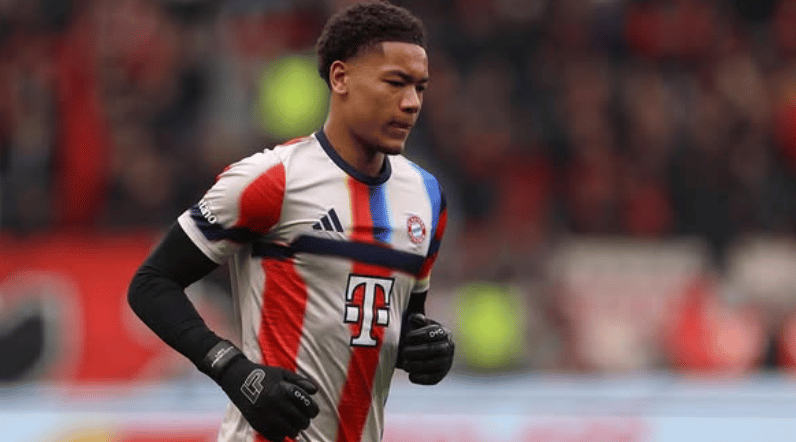
@leo.pct1
An extraordinary opportunity could be unfolding for 16-year-old goalkeeper Leonard Prescott at FC Bayern Munich. The New York–born prospect, currently listed as the club’s fifth goalkeeper, could be called into action for Bayern’s upcoming return leg against Atalanta BC in the UEFA Champions League.
The unexpected scenario stems from a growing injury situation in Bayern’s goalkeeper group. Veteran backup Sven Ulreich is currently sidelined, while questions remain about the availability of young goalkeeper Jonas Urbig and whether he can recover in time for the match. If those absences hold, Prescott could be thrust into the matchday lineup — and potentially the starting role.

@leo.pct1
For a player of Prescott’s age, the moment would represent one of the most unusual pathways imaginable to a professional debut. Goalkeepers typically progress gradually through youth and reserve teams before even approaching first-team minutes, particularly at clubs competing for major European titles.
The story becomes even more remarkable considering Prescott’s connection to the competition itself. Just two years ago, he was working as a ball boy during Champions League matches. Now, due to circumstances and rapid development within Bayern’s system, he could find himself stepping onto the field in the very same tournament.

@leo.pct1
Moments like this illustrate how quickly opportunity can emerge within elite football environments. For young players inside top academies, proximity to the first team can create unexpected openings when injuries or squad challenges arise. If Prescott does step onto the field, it would be a striking example of the unpredictable nature of the player pathway — and a reminder that preparation at the youth level can suddenly translate into the biggest stage in club football.