- Footy Access Exclusive
- Posts
- Next Up Is Now: How Gozo, USYNT U16s & Heath Are Shifting The Timeline
Next Up Is Now: How Gozo, USYNT U16s & Heath Are Shifting The Timeline
From Zavier Gozo entering World Cup conversations to Fred Heath breaking into Manchester United first-team training and the United States U-16 Boys’ National Team facing elite global tests, the next generation of American-linked talent is moving faster — and being evaluated earlier — than ever before.

Leo Santos
April 10, 2026
WC Radar: Zavier Gozo’s Name Is Getting Louder

U.S. Soccer
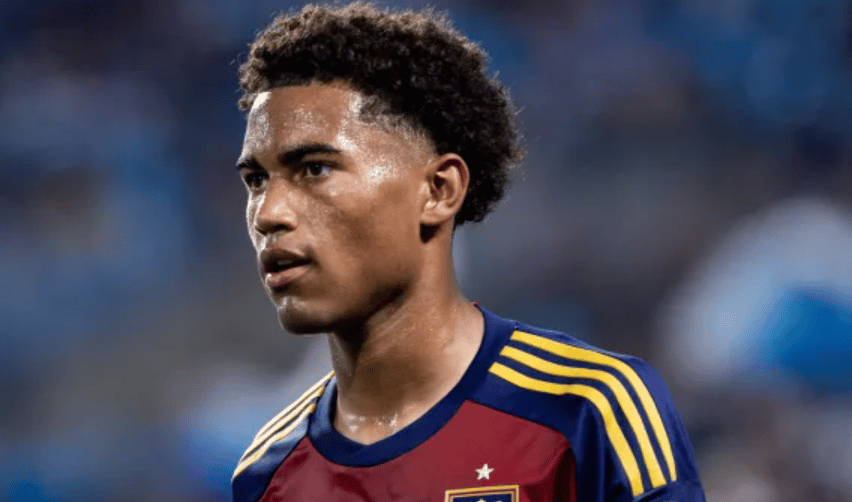
At just 18, Zavier Gozo is forcing his way into one of the most competitive conversations in American soccer: a potential call-up to the USMNT for this summer’s World Cup. What started as a breakout MLS season is quickly evolving into a legitimate national team discussion, driven by consistent high-level performances and growing belief from key voices in the game.
Gozo’s impact at Real Salt Lake has been immediate and measurable. Operating primarily as a winger, he’s played a direct role in the club’s fast start, providing verticality, 1v1 threat, and end product in decisive moments. More importantly, he’s not just contributing — he’s influencing games in ways that translate to the international level: pace in transition, confidence in isolation, and the ability to break defensive structures.
MLS
The external validation is already here. Former USMNT striker Herculez Gomez publicly stated he would take Gozo to the World Cup if given the choice among U20 players. That’s not casual hype — it’s a signal. When a former international with deep knowledge of the player pool makes that kind of statement, it reframes Gozo from “prospect” to “option.”
At the same time, European interest is beginning to materialize. Clubs across top leagues are tracking his development, recognizing a profile that fits the modern winger archetype: explosive, fearless, and tactically adaptable.

Real Salt Lake
With the World Cup roster looming, the U.S. player pool is still fluid in wide attacking areas. Injuries, form fluctuations, and tactical needs leave room for a high-upside inclusion. Gozo’s current trajectory positions him as a disruptive candidate — someone who doesn’t just fill a roster spot, but changes the tempo and dynamic of a match.
Gozo represents a shift in the American development pipeline. Instead of waiting until 21–23 to break through, elite talents are accelerating timelines and entering senior national team conversations as teenagers. If he makes the squad, it’s not just a personal milestone — it’s proof that the next-gen pathway is compressing, and that MLS-to-World Cup is no longer a long shot, but a viable fast track.
US U16s Step Into Global Competition In Sunshine State
FC Cincinnati
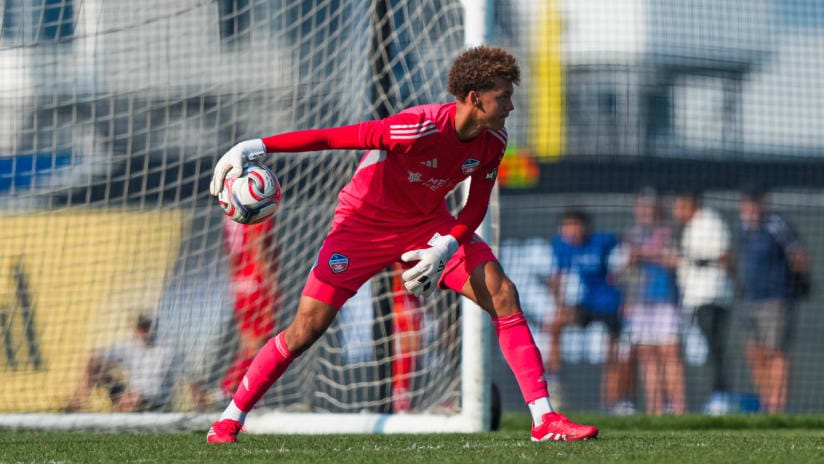
The United States U-16 Boys’ National Team is entering a critical evaluation window as head coach Paul Simpson named his 24-player roster for the 2026 Vertex Cup in Miami. Running from April 12–23, the camp isn’t just another youth gathering — it’s a structured benchmark against elite international opposition, designed to identify which players can translate domestic development into global performance.
The competition format raises the stakes immediately. The U.S. will face England, Mexico, and Argentina U-16 in a round-robin setup — three distinct tactical identities, three different stress tests. England brings physicality and structure, Mexico tests technical sharpness and tempo, while Argentina challenges decision-making in tight spaces. For this age group, it’s as close to a “complete profile exam” as it gets.

Sacramento Republic
Roster construction tells its own story. Chicago Fire FC and Philadelphia Union lead all clubs with three selections each, reinforcing their status as two of the most productive development environments in the country. They’re followed by multi-player representation from Atlanta United FC, Colorado Rapids, FC Dallas, and St. Louis City SC — all clubs with established pathways and proven integration between academy and first-team philosophy.
Beyond MLS, the inclusion of a player from AFC Ajax signals early European exposure within the pool, while representation from Sacramento Republic FC highlights the expanding relevance of alternative development routes. This blend reflects a modern U.S. pathway reality: elite prospects are no longer confined to a single ecosystem, and federation scouting is adapting accordingly.

Colorado Rapids
Some marquee players called up include FC Cincinnati’s Connor Dale, Colorado Rapids’ Nathan Tchoumba, Sacramento Republic’s Da’vian Kimbrough and St. Louis CITY’s Kane Kraus.
This camp is not isolated — it’s directly tied to long-term objectives. The U-16 group is building toward the 2027 Concacaf U-17 Qualifiers, which serve as the gateway to the 2027 FIFA U-17 World Cup in Qatar. Every selection, minute, and matchup is part of narrowing a wide pool into a high-performance core that can handle qualification pressure and, eventually, global tournament expectations.
This is where the next cycle is quietly decided. The Vertex Cup isn’t about results — it’s about identifying who can operate at international speed, process under pressure, and fit into a scalable system. For Gen Z prospects, these moments are the first real separation points. The players who adapt here don’t just stay in the pool — they accelerate through it, shaping the future spine of the U.S. youth-to-senior pathway.
Elijah Roche Secures European Move To Sturm Graz

Sturm Graz
2008-born defender Elijah Roche has officially completed a move to Austrian club SK Sturm Graz.
Roche departs Toronto FC, where he progressed through both the academy and second team system, consistently standing out as one of the top defensive prospects in North America.

@elijahroche3
At the international level, Roche has earned multiple call-ups with Canada's U-17 national team, reinforcing his status as a high-upside talent in the Canadian pathway.
Beyond the headline, this move places Roche into one of Europe’s most efficient development ecosystems. Sturm Graz has built a reputation for trusting young defenders in high-tempo, tactically demanding environments — an immediate upgrade in game speed, decision-making requirements, and positional accountability compared to the MLS NEXT Pro pathway. For Roche, the key development lever will be adapting to Austria’s structured defensive systems while accelerating his physical and tactical maturity against senior competition.

@elijahroche3
This transfer signals a growing shift in the North American pathway: elite 2008s are no longer waiting for domestic first-team minutes — they’re targeting earlier entry points into Europe. Roche’s move reflects a calculated bet on environment over comfort. For Canadian prospects, it reinforces that the bridge from academy to the second team and then Europe is now a viable, repeatable route.
If Roche breaks through at Sturm Graz, it won’t just validate his individual ceiling — it will further legitimize early outbound moves as a high-upside strategy for the next wave of North American defenders.
Fred Heath Enters First-Team Picture At Man United
Manchester United
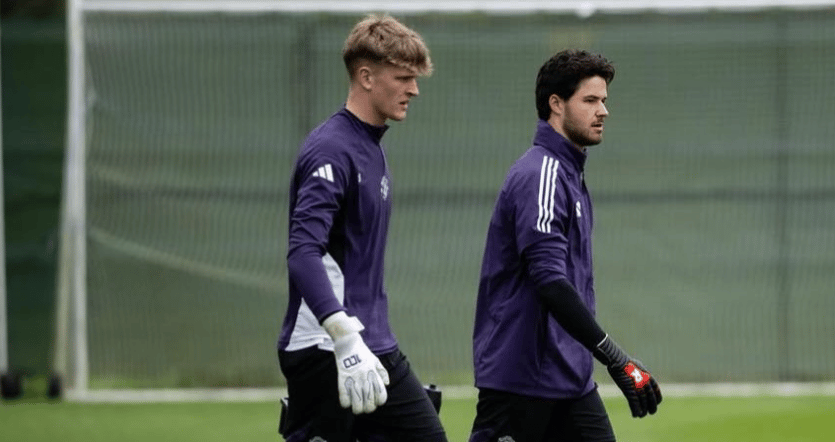
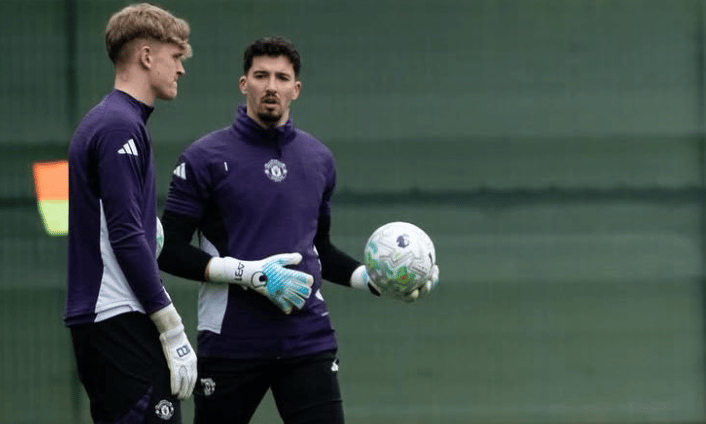
At 18, Fred Heath has taken a significant step in his development, recently training with the first team of Manchester United during their camp in Dublin. For any academy player, this is a key internal milestone — an early signal that the club sees potential alignment between youth performance and senior-level demands.
Heath’s profile is immediately attention-grabbing. Standing at 6-foot-7, he offers a rare physical presence in goal, paired with a growing reputation for consistency. This season, he has logged 13 appearances with United’s U18 side, recording six clean sheets — numbers that reflect both individual reliability and command of his defensive unit.
Manchester United
But the jump from academy to first-team environment is less about stats and more about adaptability. Training alongside senior professionals accelerates decision-making speed, positional discipline, and communication standards. For a goalkeeper, especially, it’s about proving you can organize, react, and distribute under significantly higher pressure.
Internationally, Heath represents a dual-national pathway worth monitoring. Born in England but eligible for the United States Men's National Team, he fits a growing category of players operating within elite European systems while remaining on the radar for U.S. Soccer. These profiles are increasingly valuable given their exposure to top-tier training environments from an early age.

Manchester United
The timing of this development phase is critical. Goalkeeper pathways are traditionally longer, but early integration into first-team settings can compress that timeline. Even without immediate match minutes, consistent exposure to senior sessions builds trust and familiarity — two factors that often determine future opportunities.
Heath’s progression highlights a key shift in the modern pathway for goalkeepers. Instead of waiting for late physical and tactical maturity, clubs are identifying and accelerating high-upside profiles earlier. If he continues on this trajectory, Heath won’t just be another academy name — he’ll become a legitimate cross-national asset, forcing decisions at both club and international level.