- Footy Access Exclusive
- Posts
- Next-Gen Pipeline: GA Cup Nears, Man City’s US Entry & Youth World Cup Dreams
Next-Gen Pipeline: GA Cup Nears, Man City’s US Entry & Youth World Cup Dreams
From the 2026 Generation adidas Cup kickoff to Manchester City’s U.S. expansion, Concacaf’s rising girls’ pathway, and Mamadou Mbacke Fall’s full-circle MLS return, this week highlights how access, exposure, and global integration are reshaping the modern player pathway.

Leo Santos
March 25, 2026
GA Cup 2026: Global Benchmark Returns To IMG Academy This Weekend

The 2026 Generation adidas Cup kicks off March 27 at IMG Academy in Florida, bringing together 80 elite youth teams across U-15, U-16, and a returning Girls Division. Organized by Major League Soccer, the tournament has become a critical checkpoint on the global development calendar, where academy prospects are tested against international standards in a high-stakes, condensed format.
The structure remains simple but demanding: 40 teams per age group, group stage into knockout rounds. MLS academies are matched with top global opposition, including FC Barcelona, FC Bayern Munich, and PSV Eindhoven at the U-15 level, alongside North American powerhouse Club América.

Depth defines the field. European academies like RSC Anderlecht and Valencia CF are joined by global entrants such as Seongnam FC and Al Fateh SC, creating a wide range of tactical and cultural matchups. For MLS prospects, this is a rare exposure to contrasting development models within a single competition.
At U-16, the level escalates. South American clubs Boca Juniors and Red Bull Bragantino headline a field that also includes VfL Wolfsburg and FC Copenhagen. Many players here are already in youth national team pools, making early performances decisive in shaping their next move.
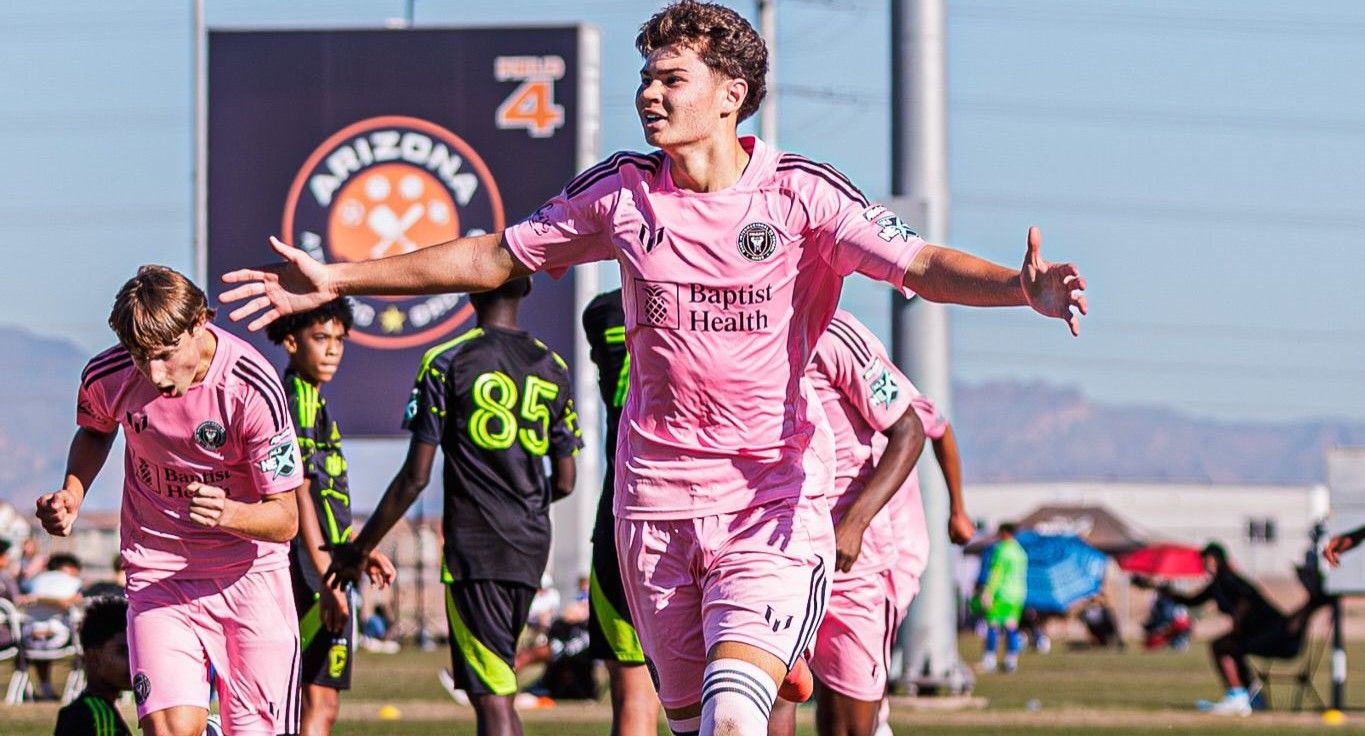
The Generation adidas Cup is no longer just a showcase — it’s a global benchmark. Scouts and national team staff track this event closely, and for players aged 14–16, it often represents their first true exposure to professional-level evaluation. In a pathway increasingly defined by early identification and global comparison, performance here doesn’t just win games — it accelerates careers.
Twenty matches will stream live on YouTube via the Major League Soccer channel, including the knockout rounds of the boys’ division and the girls division final.
Manchester City Launches US Pathway With North Texas Expansion

Manchester City FC has officially entered the U.S. youth development space, launching Manchester City North Texas FC in Dallas. Targeting players aged 8–19, the initiative marks a strategic expansion of the club’s global pathway into one of the most competitive talent markets in the country.
The program will deliver structured training and competition aligned with City’s methodology, with full-time coaches relocating from England. Players will also gain access to camps and potential training experiences at the City Football Academy, creating a direct link between local development and the club’s elite environment.

This is a full-system export, not a satellite model. Manchester City is implementing its complete development framework — positional play principles, player profiling, and long-term progression planning — across foundation to elite levels within a single, unified structure.
For players, that translates to early exposure to a possession-based system, faster decision-making demands, and role-specific training typically seen only in top European academies — now delivered domestically.

This move lowers the barrier to elite development in the U.S. while raising the standard locally. With centralized coaching, global methodology, and direct international access points, the pathway is becoming both more competitive and more accessible. The question shifts from where to develop to whether players can meet the demands of a world-class system now operating at home.
Concacaf Quartet Locks In 2026 U17 Women’s World Cup Spots

The United States, Mexico, Canada, and Puerto Rico have officially qualified for the 2026 FIFA U-17 Women's World Cup, set for November in Morocco. All four nations advanced through the Concacaf U-17 Women’s Qualifiers, reinforcing the region’s growing depth in the girls’ development pathway.
For Puerto Rico, this marks a historic breakthrough — the nation’s first-ever appearance at a FIFA World Cup across both men’s and women’s competitions. It’s a milestone that signals real progress in emerging programs within the region.

The U.S., Mexico, and Canada enter as established pipeline systems with consistent youth national team integration and clear professional pathways. Puerto Rico’s emergence challenges that hierarchy, highlighting a broader competitive spread across Concacaf.
Qualification at this level reflects more than results — it points to investment, scouting infrastructure, and alignment between youth and senior national team development. The gap between traditional powers and emerging programs is narrowing.

The pathway is expanding. More players are gaining early exposure to elite international competition, accelerating identification and progression. For smaller federations, Puerto Rico proves the model is replicable. For established nations, rising internal competition increases the standard — making global impact in Morocco, the next true benchmark.
Mamadou Mbacke Fall’s Full-Circle Moment

Mamadou Mbacke Fall made his Major League Soccer debut for St. Louis CITY SC this past weekend, completing a full-circle moment in a pathway defined by calculated progression. At 23, his return to the U.S. marks the latest step in a journey that has spanned continents, systems, and competitive levels.
After arriving from Senegal, Mbacke developed at Montverde Academy, one of the top prep environments in the country, before beginning his professional career with LAFC. His early transition into MLS established a foundation, but the next phase of his pathway came through a strategic move to Europe.

In Spain, Mbacke featured for Villarreal CF B and made his La Liga debut in 2023 — an important benchmark in his development. He later joined FC Barcelona B, gaining exposure to one of the most demanding positional-play systems in world football.
Now with St. Louis CITY SC, Mbacke re-enters MLS with added tactical maturity, international experience, and a refined understanding of elite-level demands. His pathway reflects a deliberate approach — leveraging both domestic and European environments to maximize development.

Mbacke’s journey is a blueprint for the modern player pathway. Early U.S. development, strategic European exposure, and a return to MLS with enhanced value are becoming a viable route for next-gen talent. For players navigating their own path, the takeaway is clear: progression isn’t linear — but the right environments at the right time can accelerate everything.
Alexander Shaw Signs First-Team Deal With Inter Miami

Inter Miami have officially signed 17-year-old midfielder Alexander Shaw to a first-team contract, with built-in options extending through June 2027 and beyond into the 2028-29 season. Shaw becomes the 11th Inter Miami CF Academy product to reach the senior squad — another clear signal that the club’s internal pathway is not just active, but accelerating.
Shaw’s integration has been deliberate and performance-based. He made his MLS debut against Charlotte FC, following earlier first-team exposure during the 2026 preseason cycle. That included appearances on the club’s “Champions Tour 2026,” where he featured against Alianza Lima, Barcelona SC, and Independiente del Valle. Notably, Shaw progressed from substitute minutes to earning a starting role — an early indicator of coaching trust in a high-competition environment.

His rise is rooted in consistent production at the developmental level. After standing out in the academy, Shaw transitioned to Inter Miami II, where he logged 13 matches and recorded two assists in his first professional season. The data point here is less about raw output and more about early professional adaptation — minutes earned, roles trusted, and progression sustained.
Internationally, Shaw is already navigating dual-pathway dynamics. He has recently been called into the United States U18 national team setup, while also drawing interest from Colombia’s U20s. Inter Miami’s decision not to release him for Colombia signals a strategic prioritization of his club development phase — common for players at this inflection point.

Shaw’s signing reinforces a critical trend — MLS academies are no longer just talent pools, but direct pipelines to first-team football. For next-gen players, the takeaway is clear: early professional exposure, not age, is becoming the primary currency. Shaw’s trajectory shows that if you can handle the speed of the game at 17, clubs are increasingly willing to fast-track the pathway.