- Footy Access Exclusive
- Posts
- GA Cup Chaos & World Cup Breakthrough: The Pathway Is Accelerating
GA Cup Chaos & World Cup Breakthrough: The Pathway Is Accelerating
The Generation adidas Cup semifinals highlight the growing competitiveness of MLS academies, while Esmir Bajraktarević’s World Cup-clinching moment underscores both the success — and retention challenges — of the U.S. player development pathway.

Leo Santos
April 01, 2026
U15 Chaos Sets The Tone As Semifinals Arrive

The 2026 Generation adidas Cup is entering its decisive phase, and the U15 bracket has already delivered a clear message: reputation means little without execution. Charlotte FC, Valencia, Seattle Sounders, and LAFC have secured semifinal spots, each arriving through distinctly different pathways. Meanwhile, the U16 division remains unresolved heading into Wednesday afternoon, but the competitive volatility across both age groups is reinforcing a central truth about this tournament — development environments are being tested, not just individual talent.
Seattle has emerged as the tournament’s most disruptive force. Their run is not just surprising — it’s structurally significant. Wins over Bayern Munich and FC Cincinnati signal more than isolated results; they reflect a group capable of executing under pressure against elite, possession-dominant systems. Their semifinal matchup against LAFC now becomes a litmus test: can Seattle’s reactive, high-intensity model break down one of MLS academy football’s most stable and tactically disciplined sides?

On the opposite side of the bracket, Valencia enters as the U15 favorite, but their path is no longer uncontested. Charlotte FC has authored the tournament’s most credible underdog run, beginning with a statement win over Toulouse in the Round of 16 and followed by a composed performance against NYCFC in the quarterfinals. This is not variance — it’s a team demonstrating tactical clarity and resilience across multiple game states. Their semifinal clash with Valencia will test whether structure and belief can outweigh technical depth and international pedigree.
The U16 division, still finalizing its semifinalists, has quietly built its own narrative tension. Copenhagen, Vancouver Whitecaps, and Red Bull Bragantino have performed to expectation, each showcasing the benefits of cohesive development models and clear first-team integration pathways. However, Seattle has again shifted the conversation, eliminating tournament favorite Boca Juniors in the Round of 16. That result reframes the bracket entirely and places Seattle at the center of the tournament’s most important developmental storyline.

The Generation adidas Cup is no longer just a showcase — it’s a benchmarking system for global academy performance. Seattle’s results across both age groups highlight the rising competitive credibility of MLS academies against traditional international powers. Charlotte’s run underscores the growing depth within U.S. development beyond legacy markets. And Valencia’s presence reinforces that elite European academies still set the technical standard.
For players, these matches are not just knockout games — they are evaluation environments. Decision-making under pressure, tactical adaptability, and the ability to impact games against unfamiliar opposition are now the primary indicators of progression. As the semifinals approach, the outcomes will matter — but the underlying signal is already clear: the gap is closing, and the pathway is becoming more meritocratic than ever.
Fuel Your Development

Searching for a flexible academic program that fits the realities of a high-level soccer schedule?
YSC Advantage offers a hybrid virtual learning model specifically designed for student-athletes, built through over a decade of collaboration with MLS academies. The program delivers a fully accredited, NCAA-approved high school curriculum tailored to meet the demands of elite players.
YSC has played a key role in supporting the growth of academy talent nationwide, providing clubs and players with a reliable education pathway. With dedicated faculty and mentors aligned to the player journey, the program is built to support progression to the college, professional, and international levels—explore more and apply below.
Esmir Bajraktarević Delivers World Cup Moment

@esmirbajraktarevi
Esmir Bajraktarević just delivered a defining moment of this international cycle, converting the game-winning penalty to send Bosnia and Herzegovina past Italy and into the FIFA World Cup. At 21, the Wisconsin-born winger has transitioned from prospect to decisive senior international contributor on one of the sport’s biggest stages.
His pathway is firmly rooted in the U.S. system. Bajraktarević developed in the New England Revolution academy and represented the United States at the youth level, establishing himself early within a structured domestic development environment.
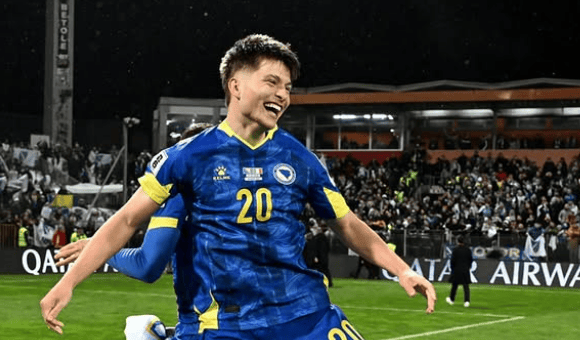
@esmirbajraktarevi
That foundation earned him a move to PSV Eindhoven, where he stepped into a higher-performance European ecosystem. This phase of his pathway reflects the increasing importance of external competition in accelerating final-stage player development.
The defining pivot came at the international level. His decision to represent Bosnia and Herzegovina created the platform for this moment, placing him in a position to deliver under maximum pressure and convert in a World Cup qualification scenario.
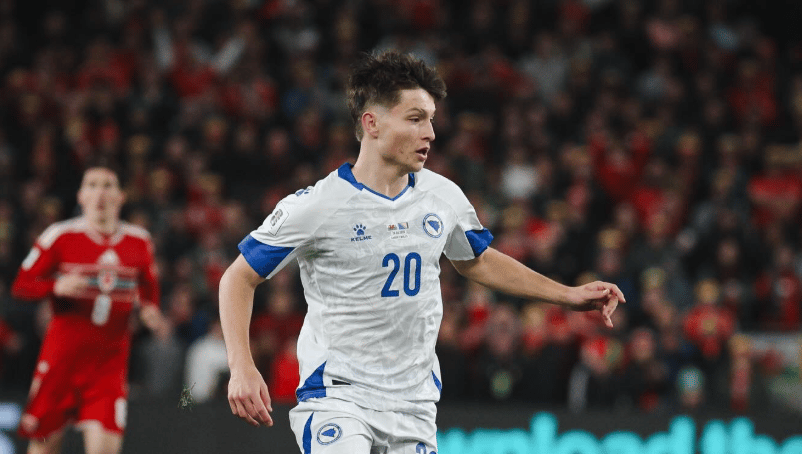
@esmirbajraktarevi
This is a clear signal within the player pathway ecosystem. The U.S. continues to develop high-level talent, but late-stage retention of dual-national players remains inconsistent. Bajraktarević’s moment is both proof of developmental success and a reminder that the final step — senior international integration — is where true pathway value is realized.