- Footy Access Exclusive
- Posts
- From MLS Youth to Global Preparation: Speeding the Pathway
From MLS Youth to Global Preparation: Speeding the Pathway
MLS teenagers are delivering immediate first-team impact while global powers select U.S.-based MLS and college facilities for World Cup preparation — two clear signals that the American development ecosystem is accelerating at every level.

Leo Santos
March 02, 2026
Teens Take Main Stage In MLS

@thematthewarana
2010-born midfielder Matthew Arana made his first-team debut for the Houston Dynamo at just 15 years old. Already the youngest signing in club history, Arana now adds another milestone — the youngest player ever to appear in a Dynamo first-team match.
This wasn’t symbolic. First-team debuts at 15 signal organizational conviction. Clubs don’t expose young midfielders — a tactically demanding position — without belief in their processing speed, physical readiness, and emotional control. For Arana, this is an early validation of long-term investment.
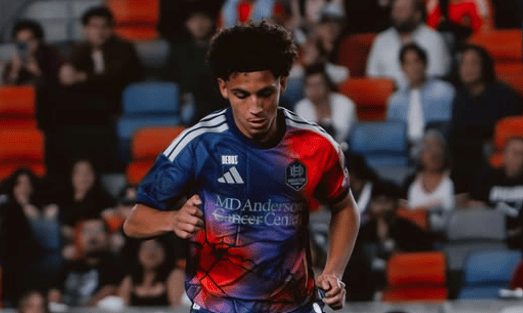
Houston Dynamo
Houston’s decision reflects a broader MLS trend: accelerate elite profiles through controlled exposure rather than prolonged academy insulation. The margin between “prospect” and “pro” is shrinking.
The pathway is evolving. Fifteen is no longer just a development age — it’s a proving age. Early debuts reshape scouting timelines, national team tracking, and internal club succession planning.

New York Red Bulls
Meanwhile in Harrison, New York, Red Bulls teenagers Julian Hall (17) and Adri Mehmeti (16) have already combined for five goal contributions in just two MLS matches to start the season.
Alongside 17-year-old Matthew Dos Santos, they made league history — becoming the youngest trio ever to combine on a goal in MLS during a 1–0 win over the New England Revolution. This isn’t developmental rotation. It’s decisive output.

New York Red Bulls
When teenagers drive results, roster planning shifts. Clubs are incentivized to double down on academy pipelines. Market value curves steepen. USYNT evaluation accelerates.
Across MLS, the signal is consistent: elite teens are no longer waiting for windows — they’re creating them.

Elevate Your Game
Every sprint, jump, and cut in soccer starts at your feet, and the players who understand that are already ahead. VKTRY carbon fiber insoles are trusted by elite athletes like Jaedyn Shaw because they’re built to help you run faster, jump higher, and move more explosively by maximizing energy return. They also absorb shock on ground contact, creating softer landings on every step and jump, which helps alleviate stress on the feet, ankles, shins, and knees.
If you’re serious about separating yourself, this is one of those upgrades you don’t wait on. Footy Access readers can get $30 off VKTRY Gold Insoles with code FOOTY30, but this offer is limited — take advantage before it’s gone.
International Powerhouses Choose US Soil World Cup Bases

Nashville SC
Several elite training facilities have now been confirmed ahead of the FIFA World Cup — and the pattern is clear: international heavyweights are selecting MLS and American collegiate environments as their preparation hubs.
France will base at Babson College, while Germany will operate from Wake Forest University and Spain has chosen Baylor School. Brazil will train at the Red Bull Performance Center, Switzerland will prepare at San Diego Jewish Academy, Japan will set up camp at Nashville SC’s training center and Ecuador will utilize the Ohio Health Performance Center.

Baylor Athletics
This isn’t symbolic — it’s strategic. National teams conduct extensive site analysis before committing to a base camp: pitch standards, sports science infrastructure, recovery facilities, privacy controls, and travel logistics. Selecting MLS and U.S. college facilities signals confidence in the performance standards embedded within the American soccer ecosystem.
For the next-gen pathway, this is validation at the highest level. When World Cup contenders trust domestic infrastructure, it reinforces the credibility of the environments developing American prospects daily.

Columbus Crew
Young players training in MLS academies or collegiate performance centers aren’t operating in secondary systems — they’re embedded in facilities capable of hosting global powers. The takeaway: infrastructure matters, and the U.S. development pyramid is increasingly aligned with elite international standards.
Nathan Tchoumba Makes Rapids 2 Pro Debut

Colorado Rapids 2
Nathan Tchoumba made his official professional debut for Colorado Rapids 2 in their season opener against Houston Dynamo 2. Just weeks after signing his first professional contract in January — becoming the youngest player in club history to sign with Rapids 2 — Tchoumba has already taken his first step into the pro game.
For context: debuting at this age isn’t just a headline. It signals institutional belief. Rapids 2 didn’t just sign Tchoumba for the future — they trusted him with real minutes in a competitive MLS NEXT Pro environment. That matters in a league designed to bridge academy talent to first-team football.

Colorado Rapids 2
Tchoumba profiles as a modern midfielder — comfortable on the ball, progressive in tight spaces, and capable of handling tempo shifts. MLS NEXT Pro is increasingly becoming the proving ground for 2010-born prospects to accelerate their pathway, and early exposure to professional speed of play is a critical development lever.
The next-gen timeline is speeding up. Clubs are identifying, signing, and deploying elite prospects earlier than ever — but the key differentiator is opportunity. A professional contract is one step. A debut is another. Meaningful minutes are the separator.

Colorado Rapids 2
For Gen Z players watching: this is the blueprint. Perform in your environment. Earn institutional trust. Take your moment when it comes. Nathan Tchoumba is officially on the pro pathway — now the development curve begins.