- Footy Access Exclusive
- Posts
- From GA Cup Finals To First-Team Contracts: The Next Wave Steps Forward
From GA Cup Finals To First-Team Contracts: The Next Wave Steps Forward
The Generation adidas Cup semifinals clarified the top-performing environments while Malik Jakupovic secured a homegrown deal and Quinn Sullivan and Cavan Sullivan made their mark at the international U19 level.

Leo Santos
April 03, 2026
GA Cup Semifinals Sets Stage For High-Level Finals

The 2026 Generation adidas Cup semifinals delivered exactly what this tournament is built for: clarity on which environments consistently produce elite-level habits. Across both the U15 and U16 brackets, the defining trend was early control — teams that dictated tempo and imposed structure in the first half ultimately advanced. That pattern now shapes two very different, but equally compelling, finals.
In the U15 division, Valencia CF removed all doubt early against Charlotte FC, securing a 3-1 win with a ruthless first-half performance. The gap wasn’t just technical — it was structural. Valencia controlled space on both sides of the ball, pressing with intent and converting chances efficiently before halftime. Charlotte struggled to adjust to the tempo and positional discipline, and by the time they found moments in the second half, the match state was already decided.
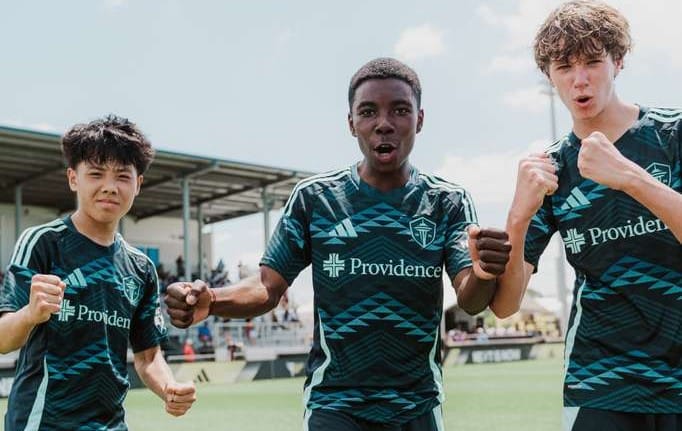
Seattle Sounders matched that control in a different way in their 2-0 win over LAFC. Where Valencia overwhelmed, Seattle managed. Defensively compact and opportunistic in transition, Seattle executed a clean game plan — limit exposure, capitalize on key moments. It wasn’t flashy, but it was effective, and it reflects a development model built on clarity of roles and defensive accountability.
That sets up a U15 final defined by contrast: Valencia CF, the tournament’s most complete side, versus a Seattle group that has outperformed expectations through discipline and efficiency. The key variable will be whether Seattle can disrupt Valencia’s early rhythm. If they can extend the match into later phases, it becomes a contest. If not, Valencia’s front-loaded dominance could decide it early again.
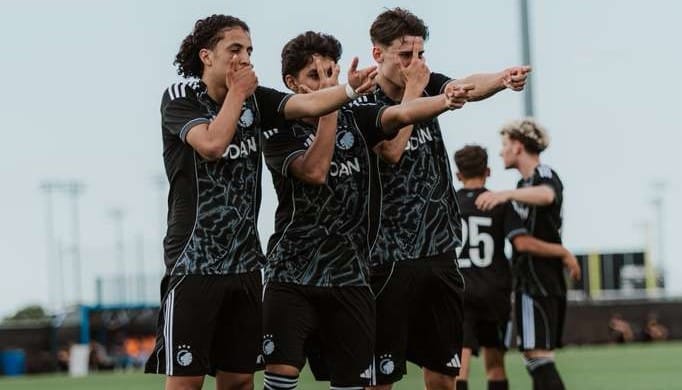
In the U16 bracket, FC Copenhagen quietly delivered one of the most controlled performances of the tournament, beating LA Galaxy 2-0 with both goals coming before halftime. Their approach won’t trend on social media, but it consistently wins matches. A composed defensive line, minimal risk in buildup, and clinical finishing in limited opportunities have made them one of the most difficult teams to break down.
RB Bragantino’s 3-2 win over Seattle Sounders told a different story — one of volatility and resilience. Bragantino’s three first-half goals, including a standout strike from Caio Cesar De Figueiredo Reis, established control. But Seattle’s response — two goals in the opening ten minutes of the second half — exposed defensive gaps and nearly flipped the match. Bragantino held on, but the performance raised questions about game management under pressure.
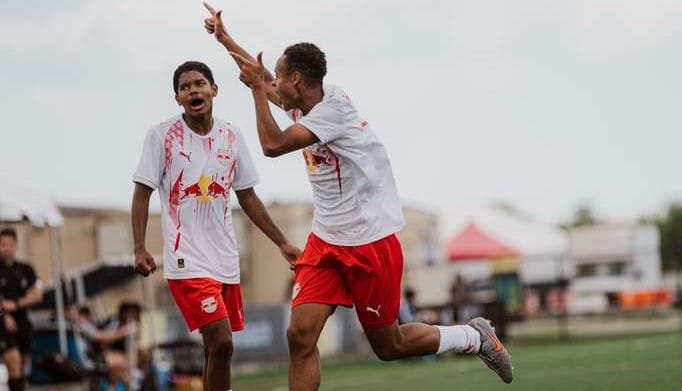
The U16 final now becomes a clash of identities: Copenhagen’s structure versus Bragantino’s attacking firepower. The deciding factor will likely be tempo control. If Copenhagen can slow the game and limit transitions, they hold the advantage. If Bragantino can stretch the match and create repeated attacking sequences, their individual quality could break through. Either way, the final is less about moments — and more about which system holds under pressure.
Malik Jakupovic Signs Homegrown Deal With Union
Philadelphia Union
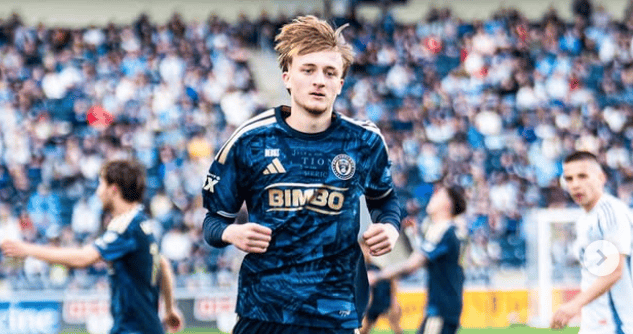
Malik Jakupović has officially signed a homegrown deal with Philadelphia Union, reinforcing one of the most reliable development pipelines in MLS. At just 16, the center forward has already touched the senior level — debuting in MLS against Chicago Fire and logging minutes in the Concacaf Champions Cup.
That early exposure matters. It signals trust from the first team staff and accelerates his adaptation to the speed, physicality, and decision-making demands of the pro game.

Philadelphia Union
Jakupović’s production at the international level backs the projection. As a focal point for the U.S. U17s, he delivered eight goals in Concacaf qualifying, showing a profile built on penalty-box efficiency, timing of runs, and composure in high-leverage moments.
Philadelphia’s system historically prioritizes verticality and striker output within structured pressing schemes — an environment that aligns with his strengths and offers a clear runway to minutes if he continues trending upward.

Philadelphia Union
This signing is a data point in a larger shift. MLS academies are no longer just development hubs — they’re becoming first-team talent engines with real integration timelines. Jakupović’s pathway from the academy to early senior exposure and a homegrown contract at 16 is increasingly becoming the benchmark for elite U.S. prospects.
If he converts this opportunity into consistent MLS NEXT Pro and first-team minutes over the next 12–18 months, it strengthens both his European trajectory and the USYNT’s depth at the No. 9 position, a profile the pipeline is actively trying to solve.
Sullivan And Albert Redefine The Curve At USYNT U19 Camp

U.S. Soccer
Cavan Sullivan and Mathis Albert didn’t just hold their own on U.S. U19 duty in Spain — they dictated games. Across two friendlies against Wales and CD Castellón’s U19s, Sullivan delivered three goals while Albert added one, both operating with a level of confidence and tempo control that stood out immediately. This wasn’t flash — it was repeatable impact in structured environments against older, physically mature opposition.
Context matters here: both were the youngest players in the squad, playing up two age groups. That gap typically exposes decision-making speed and physical limitations. Instead, Sullivan’s attacking instincts — late box entries, tight-space execution, and composure in front of goal — translated seamlessly. Albert complemented that with intelligent movement between lines and efficient final-third actions, showing an ability to influence play without overextending touches.

U.S. Soccer
The tactical takeaway is just as important as the output. In a camp setting with limited time to build chemistry, both players demonstrated adaptability within the U19 structure. Their ability to interpret spacing, press triggers, and transition moments suggests a high processing speed — arguably the most reliable indicator of long-term projection at the elite level.
There’s also a pathway signal embedded here. Performing up two age groups isn’t just a development checkbox — it’s a stress test used by federations to identify who can accelerate. Sullivan and Albert didn’t just pass; they raised their profiles within a competitive player pool that feeds directly into U20 and eventually senior team consideration cycles.

U.S. Soccer
The U.S. player pathway is increasingly defined by early identification and fast-tracked integration. When players this young produce against older international competition, it compresses timelines and reshapes expectations. For clubs and the federation, it validates aggressive development strategies. For the players, it opens the door to earlier professional minutes, higher-level competition, and a clearer runway toward the top of the pyramid.
Alex Gomez Earns South American Championship Call-Up

@iamxito3
Alex Gomez is hitting a key milestone in his development curve. The 16-year-old right back has been called into the Colombia U17 squad for the upcoming South American Championship in Paraguay — one of the most competitive youth tournaments globally and a proven accelerator for elite prospects. For a player still early in his pathway, this isn’t just recognition — it’s selection into a high-pressure evaluation environment.
The call-up builds on recent momentum. Gomez made his Colombia debut during the February camp in a friendly against Brazil and followed that with another selection in March, signaling sustained trust from the national team staff. At the youth international level, repeat call-ups matter — they indicate not just potential, but reliability within a tactical system and consistency in training environments.

@iamxito3
From a profile standpoint, Gomez fits the modern fullback archetype. Colombia’s U17 setup typically demands width, recovery speed, and clean decision-making in transition. For a right back, that means balancing defensive discipline with forward timing — overlaps, underlaps, and the ability to deliver in the final third without compromising structure. Earning minutes in this context is as much about tactical execution as it is about physical tools.
The South American Championship will provide a sharper benchmark. Facing top CONMEBOL opposition introduces higher tempo, tighter spaces, and more direct 1v1 duels — conditions that stress-test positioning, anticipation, and composure. For Gomez, it’s an opportunity to translate training-camp trust into in-game impact against elite peers.

@iamxito3
This call-up reflects a broader trend — dual-national and U.S.-based prospects accessing high-level international competition earlier in their development. For Gomez, competing in a tournament of this caliber can accelerate his progression, raise his visibility, and sharpen his readiness for the professional game. For the pathway, it reinforces the value of placing young players in environments where performance — not reputation — drives advancement.